
Reading Zurich history through its places
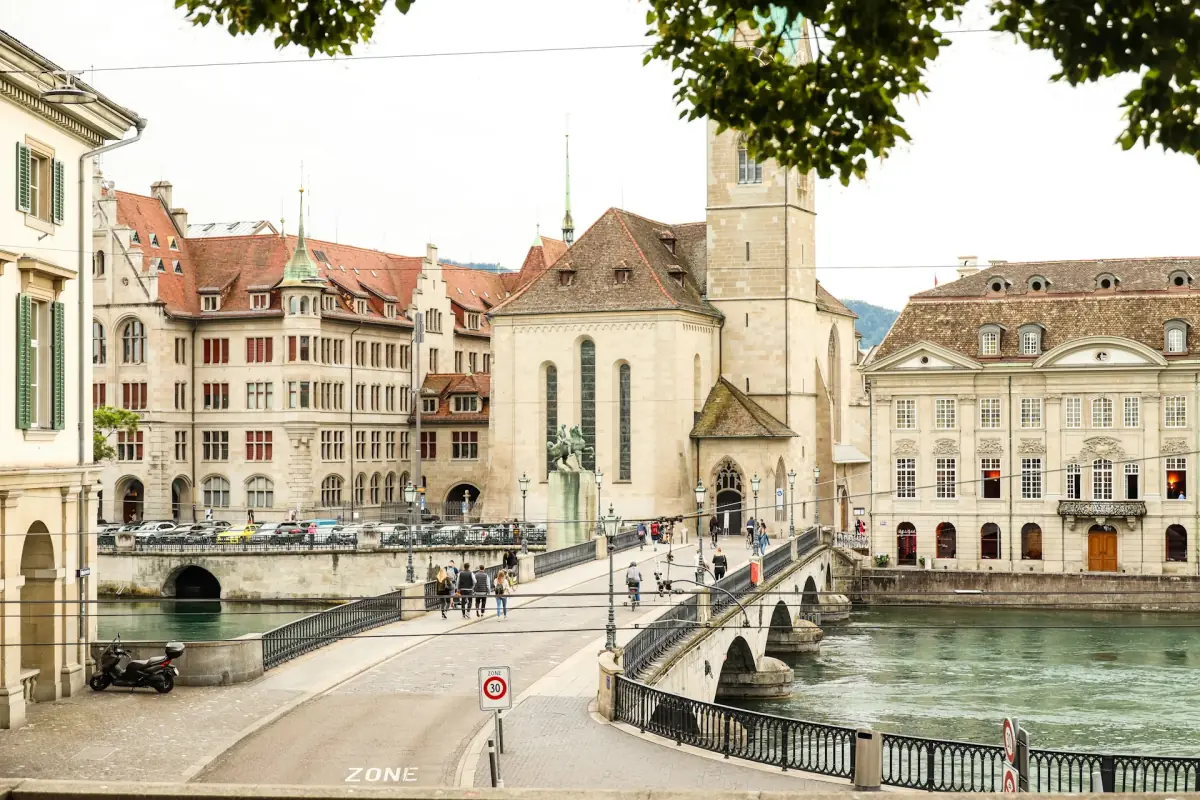
Zurich history can be followed through the Lindenhof, the churches and the city's cultural institutions. The Lindenhof carries the earliest dated layers in this route: a Roman fort in the fourth century and a royal residence in the ninth. From its terrace, the view across the Limmat towards the town hall and Grossmünster gives those historical subjects a setting in the present-day city.
Use the chronology as a way to look, rather than a list of buildings to enter. Begin with the hill and river, connect the medieval religious sites, then turn to modern cultural history. For practical walking and church arrangements, use the old-town guide. The sightseeing overview helps place the historical stops within a wider visit.
Lindenhof from Roman fort to royal residence
A Roman fort occupied the Lindenhof in the fourth century. A royal residence followed in the ninth century. These are separate phases of the site, worth keeping distinct when you look across the city. The terrace provides a viewpoint today, while its earlier roles introduce the long history behind a familiar stop on a walking route.
Start here if you want the geography to make sense before the individual dates. Look towards the river and the buildings across it, then consider how the same place can matter in different periods. You will return to the Lindenhof later in the chronology for an event in 1798. This makes it a useful anchor for the whole historical walk.
Explore the old town
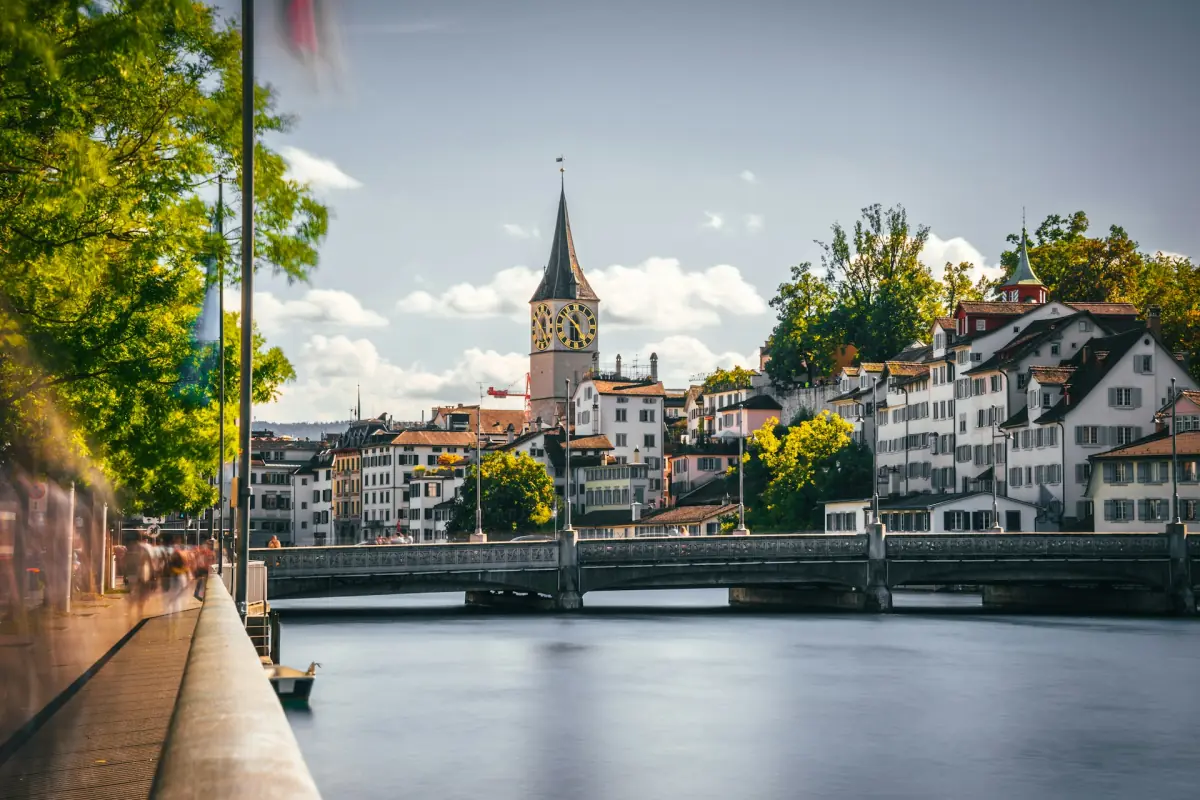
A guided old town walk lets you explore Zurich on foot.
Hand-picked tours, booked through Viator. Prices are indicative starting prices in Swiss francs (as of October 2026). Tap a tour for live availability and the current price in your currency.
Explore the old town with a guide
A two-hour guided walk explores the old town and its alleyways, meeting in front of the Visitor Information inside the main station's large hall.
Fraumünster foundation in 853 and imperial freedom in 1218
Louis the German founded the Fraumünster abbey in 853. That date introduces the medieval religious chapter of this route. In the crypt museum, the subject extends across more than 1,200 years of monastery building history and the Reformation. It is a way to add depth to an exterior walk when your interest is the development of the site.
Zurich became imperially free in 1218. Keep this civic milestone alongside the history of the abbey, rather than treating every medieval building as part of a single founding moment. A walk through the old town can connect religious history and the city's political development without forcing them into the same story. Choose the crypt visit for closer interpretation of the monastery site.
Grossmünster and the founding legend
The tradition linking Grossmünster's foundation to Charlemagne is told as a legend. Read it as part of the way the church's origins have been narrated, with a different status from the dated milestones of 853 and 1218. The building belongs in a historical walk, while its founding story calls for that distinction. For interior visits and tower access, continue to the practical old-town page.
The Lindenhof oath in 1798
In 1798, the Lindenhof was the setting for an oath to the constitution of the Helvetic Republic. Returning to this site in the chronology shows why a city walk need not move steadily from one building to the next. The same place connects the Roman, royal and later constitutional chapters, each with its own date and context.
When planning your route, decide whether to read the timeline first or pause at each place with the relevant chapter in mind. The history works either way. The point is to distinguish what happened on a site from what you can see there now, and to let a present-day viewpoint carry more than a single postcard image.
Dada and Cabaret Voltaire in 1916
Cabaret Voltaire connects Zurich with the emergence of Dada in 1916. This introduces a different cultural subject after the earlier fort, abbey and civic milestones. Include it when your interest extends from historic architecture to artistic ideas. It gives a modern cultural reason to explore the old town as well as a medieval one.
Pair this chapter with the kind of museum visit you enjoy. The Landesmuseum covers Swiss history, while the Kunsthaus offers collection and exhibition choices. The museum guide separates those subjects and the admission categories, so you can choose a visit that adds to your historical interests instead of adding another stop simply because it is available.
Kunsthaus and the cultural city in 2021
The Kunsthaus extension opened in 2021. It supplies a recent endpoint for a chronology beginning on the Lindenhof. A history visit can therefore include contemporary additions to the city's cultural spaces alongside the older streets and churches. Choose whether to finish with an art visit or keep the museum for another day.
Bahnhofstrasse offers another connection between the old city's shape and its present use: the shopping axis follows a former moat. Niederdorf, on the right bank of the Limmat, is a car-free part of the historic centre. These places let you bring the timeline back into an ordinary walk without turning every moment into a separate paid visit.
History questions
Which dates give a useful first outline?
Begin with the Roman fort in the fourth century, the Fraumünster foundation in 853 and imperial freedom in 1218. Continue with the Lindenhof oath in 1798, Dada in 1916 and the Kunsthaus extension in 2021.
Did Charlemagne found Grossmünster?
The connection is a founding legend. Keep that tradition distinct from the dated milestones when following the city's history.
Where does the guided walk meet?
The two-hour old-town experience meets in front of the Visitor Information inside the main station's large hall. It includes a guide and exploration of the old town and its alleyways.